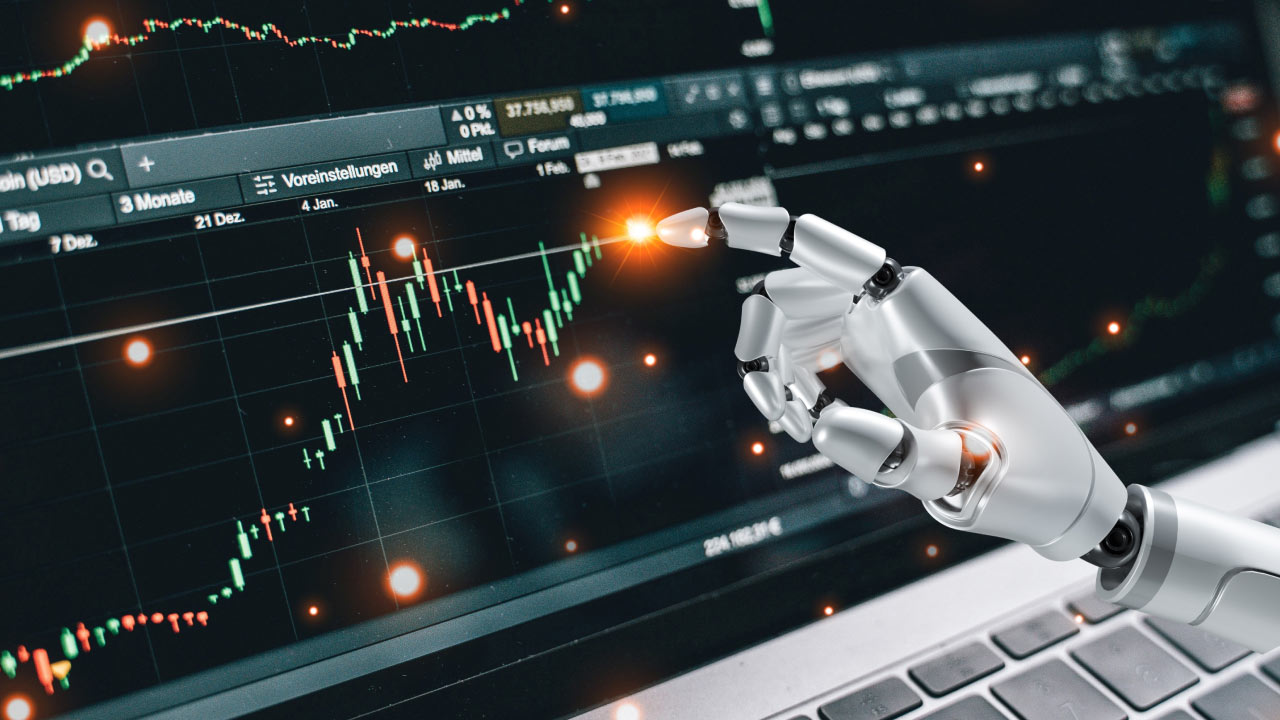
among the traders in PAPER TRADING. Also, for some, the very fact of paper trading is a possible source of restriction because it cannot bring their trading discipline to life. For others though, participation in live trading might mean their complete devoting of time and attention to another source of income. Nevertheless, amongst the differences between paper and live trading, the traders' psychology is by far the most powerful factor.
Before trading real money, futures traders have to consider their options: PAPER TRADING or jumping right into the market. This decision gets even more important when you are dealing with futures on the Nasdaq stock market, as timing, liquidity, and even behavior of the market in the NASDAQ FUTURES TRADING HOURS can have a large effect on the profits or losses you make.
Understanding Paper Trading in Futures Markets
One of the benefits and risks of paper trading is that it does give the trader a chance to try out his ideas and develop his skills in a way that is cost-free. Many modern trading platforms provide traders with a paper trading environment that closely mirrors the live market, with even the same real-time price data,charts, and order types.
Bull traders, in particular, have fewer risks than however they are still doing paper trade. The traders can use scalping, day trading, or swing trading strategies to test the market without having to worry about their emotions controlling them. For this reason, paper trading is a great tool for both the novice trader and the master trader exploring a new system. The most advanced and powerful consequence of paper trades though might very well be the traders' psychology which is a significant factor among the differences between paper and live trading.
What Are The Upsides And Downsides To Each Mode Of Trading?
On the one hand, if there is clearly no market stress, there is no talk about the above-mentioned emotional factors (or at least they are not so present) in PAPER TRADING. In contrast, the lives of traders participating temporarily or on a regular basis in a trading simulatory market are devoid of the ups and downs of emotions and consequently are less vivid.
Thus, the emotional component accompanying the entire trading process at the live market poses one of the most importantest factors differentiating between these two types of trading.
Before making the decision of putting on PAPER TRADING or live trading, futures traders have to test their strategies first. This becomes even riskier if traders trade stock futures in a highly volatile environment like Nasdaq, where the combined effects of timing, liquidity, and session behavior during NASDAQ FUTURES TRADING HOURS can dictate the final outcome of capital gains or losses.
One of the main advantages and at the same time risks of paper trading is that it allows the trader to try out his ideas for free. Each paper trading environment provided by the major platforms comes along with exactly the same real-time price data, charts, and order types as the live market.
What Makes Live Trading Different?
Paper trading, in general, is less risky than real trading but nevertheless the risk is still present. The traders can use scalping, day trading, or swing trading strategies to test the market without having to worry about their emotions controlling them. For this reason, paper trading is a great tool for both the novice trader and the master trader exploring a new system. The most advanced and powerful consequence of paper trades though might very well be the traders' psychology which is a significant factor among the differences between paper and live trading.
What Are The Pros And Cons Of Each Trading Mode?
On the one hand, if there is clearly no market stress, there is no talk about the above-mentioned emotional factors (or at least they are not so present) in PAPER TRADING. On the other hand, the lives of traders participating temporarily or on a regular basis in a trading simulatory market are devoid of the ups and downs of emotions and consequently are less vivid.
Thus, the emotional component accompanying the entire trading process at the live market poses one of the most importantest factors differentiating between these two types of trading.
Before making the decision of putting on PAPER TRADING or live trading, futures traders have to test their strategies first. This becomes even riskier if traders trade stock futures in a highly volatile environment like Nasdaq, where the combined effects of timing, liquidity, and session behavior during NASDAQ FUTURES TRADING HOURS can dictate the final outcome of capital gains or losses.
One of the main advantages and at the same time risks of paper trading is that it allows the trader to try out his ideas for free. Each paper trading environment provided by the major platforms comes along with exactly the same real-time price data, charts, and order types as the live market.
Paper trading, in general, is less risky than real trading but nevertheless the risk is still present. The traders can use scalping, day trading, or swing trading strategies to test the market without having to worry about their emotions controlling them. For this reason, paper trading is a great tool for both the novice trader and the master trader exploring a new system
During the high-volume NASDAQ FUTURES TRADING HOURS—like the beginning of the U.S. trading day—live trading in Nasdaq futures can intensify traders' emotions that are caused by the quick price changes. It is possible that traders will start to abandon their trading plans, will buy and sell too much, or will not follow the rules of risk management at all because of their emotional states.
Live trading brings in real execution and emotional handling but also mistake costs for the traders if they are not well equipped.
Nasdaq Futures Trading Hours Overview
When the paper trading and the live trading are to be compared, knowing the NASDAQ FUTURES TRADING HOURS is very crucial. Nasdaq futures (like the E-mini Nasdaq-100) are almost 24/7 traded, i.e. opening Sunday night and closing Friday night, only with some short daily maintenance breaks.
The trading hours can roughly be divided into:
Asian session (low volatility)
European session (moderate volume)
U.S. session (highest liquidity and volatility)
The market behavior changes a lot from one session to another, and thus the performance of the strategy will also depend on the time. A strategy that gives good results during the U.S. open can be unsuccessful in the overnight hours because of the reduced liquidity.
Testing Strategies Across Different Trading Sessions
One of the biggest benefits of PAPER TRADING is that it allows testing of strategies across all NASDAQ FUTURES TRADING HOURS with no financial risk involved. The traders can gather information, monitor their win rates, and look into their drawdowns during different trading sessions.
For instance:
Scalping strategies may yield better results when applied to the U.S. hours of high volume.
Breakout strategies may not work during Asian sessions of low liquidity.
Mean reversion setups may be suitable for overnight periods of consolidation.
Paper trading enables traders to improve their rules for entering trades, stop-loss placement, and profit targets according to the specific behavior of each session, before they switch to the live market.
Execution and Slippage: Simulation vs Reality
PAPER TRADING has the drawback that it does not provide the real execution problems which are present in live trading; thus, being one limitation. In actual Nasdaq futures trading, it is common to have slippage and delayed fills, especially in the case of very active NASDAQ FUTURES TRADING HOURS like the releases of major economic news. Trading with paper usually presumes that there will be perfect order fills, which can make strategies look more profitable than they really are. When a changeover to live trading occurs, the traders may see that the profit has been lessened because of the cost of execution in the real world. To lessen this gap, it is suggested that traders apply the conservative assumptions during paper trading and gradually lower their position size while switching to live accounts.
Psychological Factors and Discipline
Psychology is the biggest factor that differentiates PAPER TRADING from live trading. In a simulated environment, traders can easily adhere to the rules as there is no fear of losing. In live trading, emotions can influence the decision-making process more than ever, particularly during the fast-moving Nasdaq futures sessions. Testing strategies in live markets during NASDAQ FUTURES TRADING HOURS teaches traders how they personally react to volatility, drawdowns, and winning streaks. This psychological data is very important and cannot be compared only with technical performance metrics. Many professional traders advocate coming down slowly from paper trading to small live positions to acquire emotional discipline.
Which Approach Is Better for Nasdaq Futures Traders?
The decision between PAPER TRADING and live trading is not an either-or proposition. Rather, they should be employed in tandem as parts of a structured trading development process. The paper trading is absolutely perfect for beginners who are trying to get to know the market, testing the new strategies, and the indicators, and gathering the information about the volatility of the market according to the sessions. At the same time, live trading is a must for emotional control, experiencing the execution conditions that are present in the market, and validating one’s strategy.
With the integration of two methods, traders will have assurance and uniformity during the whole NASDAQ FUTURES TRADING HOURS.
Conclusion
The testing of strategy while trading Nasdaq futures is totally meaningless if simulation and real-market exposure are not taken into account. PAPER TRADING is a risk-free environment to test and measure performance during different NASDAQ FUTURES TRADING HOURS, while live trading gives the emotional and execution reality that is required for long-term success.
Traders who start with paper trading and then move to live markets carefully are the ones who will be able to withstand the swings, the quickness, and the psychological strain of Nasdaq futures trading better.